Germany Picks Sarah Engels… and Sets “Fire” to Berlin
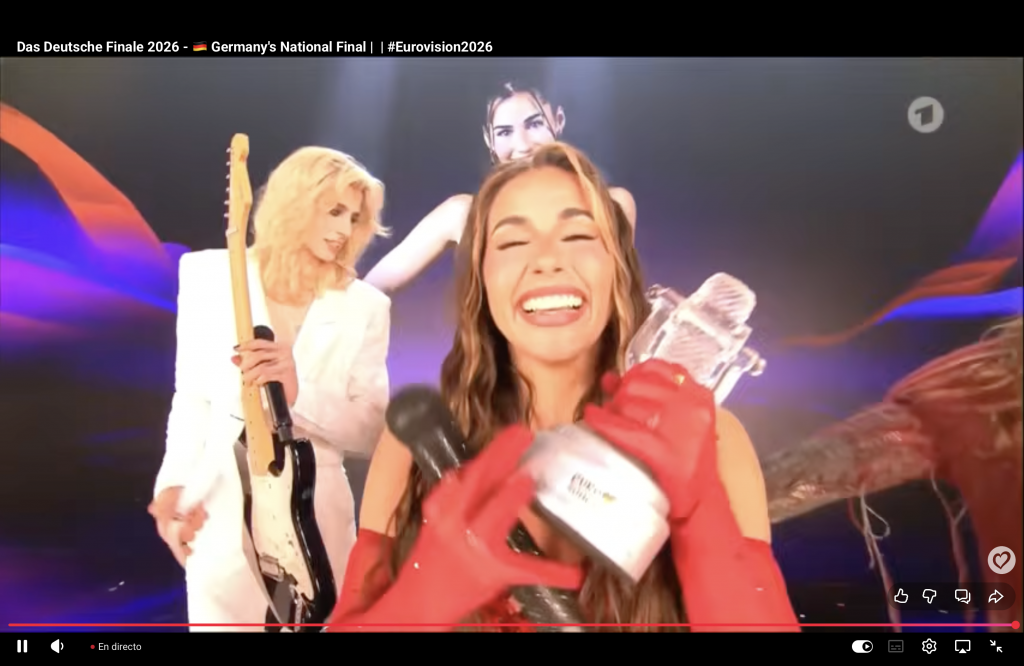
Germany has finally stopped overthinking it. Tonight in Berlin, Eurovision Song Contest – Das Deutsche Finale 2026 gave us nine acts, two hosts with exactly the right level of mischief, and a voting system designed to make everyone feel involved right up until the moment they start arguing about it. By the end of it all, Sarah Engels emerged as Germany’s new Eurovision standard-bearer with “Fire”, which is either delightfully on-the-nose or an omen, depending on how traumatised you are by past German results.
The show was fronted by Barbara Schöneberger and Hazel Brugger, a pairing that basically guarantees you’ll get glamour, sarcasm, and the faint sense that someone is one raised eyebrow away from roasting the entire concept of a national final. Nine artists cycled through the stage, Berlin did its best “we’re cool, we’re calm” thing, and then the format kicked in with that very German efficiency: first the experts pick the shortlist, then the public finishes the job.
Running order
BELA – “Herz”
Dreamboys The Band – “Jeanie”
Laura Nahr – “Wonderland”
Malou Lovis – “when I’m with you”
Molly Sue – “Optimist (Ha Ha Ha)”
MYLE – “A OK”
Ragazzki – “Ciao Ragazzki”
Sarah Engels – “Fire”
wavvyboi – “black glitter”
Results
The winner was decided across two rounds, because apparently we all needed an extra cardio session. In the first round, the international jury selected the Top 3. In the second round, the public vote chose the actual winner, which is a polite way of saying: “Thank you for your expertise, now let the people do what they came here to do.”
International jury Top 3
Molly Sue – “Optimist (Ha Ha Ha)”
wavvyboi – “black glitter”
Sarah Engels – “Fire”
Winner
Sarah Engels – “Fire”
A two-step win that actually makes sense
This is the rare format where the structure doesn’t feel like it was invented by someone who hates joy. The jury gets to reward what they think will work on the Eurovision stage, the public gets to choose what they’ll actually support, and Germany ends up with a winner who ticked both boxes. Sarah Engels didn’t just sneak through, she was in the jury’s Top 3 and then sealed the deal when the audience had the final say. That’s the kind of momentum you want when you’re about to walk into a contest full of countries who treat staging like an Olympic sport.
And honestly, the song title alone is doing a lot of heavy lifting in the headline department. “Fire” is a statement, it’s a promise, and it’s also the sort of word that makes Eurovision lighting designers sit up like they’ve just been offered overtime.
From Basel to Vienna: Germany turns the page
Sarah now takes over from Abor & Tynna, who represented Germany in Basel last year with “Baller” and finished 15thin the Grand Final. Not a disaster, not a fairytale, but very much in that “we can do better” zone that Germany seems to live in like it’s a long-term rental.
So here we are: Berlin has spoken, the public has pressed the button, and Germany is heading to Vienna with Sarah Engels and a song called “Fire”. If nothing else, it sounds like a delegation that intends to be noticed. And at Eurovision, being noticed is half the battle. The other half is surviving rehearsal week without changing the key, the costume, and your entire concept twice a day. Germany, I believe in you. Mildly. On a trial basis.