These are the first Eurovision Icons joining the 70th anniversary Live Tour and it already feels special
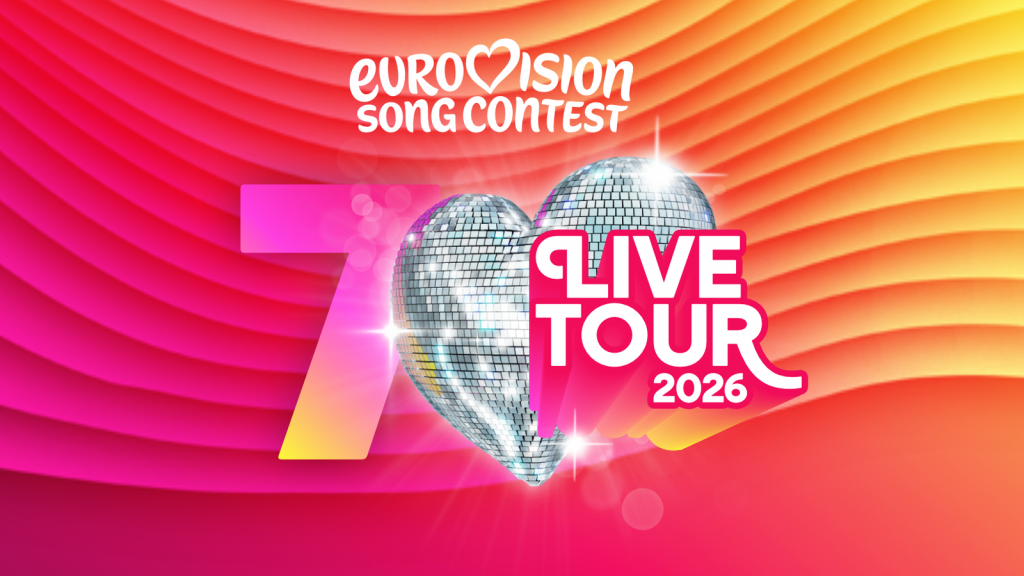
Eurovision has announced the first artists for its official 70th anniversary Live Tour and honestly, this is one of those line-ups where you instantly start picturing the songs in your head.
Not a logo. Not a slogan. Not a concept.
Faces. Voices. Costumes. Choruses.
The first names confirmed by the EBU are Alessandra, Guy Sebastian, Helena Paparizou, Katrina, Johnny Logan, Lordi and Verka Serduchka.
Seven artists. Seven very different relationships with Eurovision.
And that is probably the most interesting part.
Alessandra is the youngest name in the group, but also one of the clearest symbols of what modern Eurovision success can look like. Her Norwegian entry Queen of Kings in 2023 did not just exist during Eurovision season. It stayed. It travelled. It kept growing. Streams, social media clips, people discovering it months later. She feels like the kind of artist whose Eurovision story is still unfolding rather than neatly wrapped.
Guy Sebastian sits at the opposite end of that timeline.
When he stepped onto the Eurovision stage in 2015, Australia was still something of a novelty in the contest. His fifth-place finish with Tonight Again helped normalise Australia’s presence almost overnight. Looking back, it feels like a small historical hinge moment. Eurovision quietly became even more global that year.
Helena Paparizou does not really need explaining to most fans, but context still matters. Greece’s first winner in 2005. Top three already in 2001. A Eurovision era-defining figure who managed to turn a contest victory into a long-lasting mainstream career. Some artists are remembered mainly for their Eurovision moment. Helena is remembered for much more than that.
Johnny Logan is in a category of his own.
Three victories. Two as a singer. One as a songwriter. Songs that people who barely follow Eurovision can still hum. His presence on this tour feels less like booking an artist and more like inviting a living chapter of Eurovision history back on stage.
Katrina represents a very specific kind of Eurovision memory.
Love Shine a Light is not just a winning song. It is one of those rare entries that became a pan-European feel-good reference point. It is also, quietly, the UK’s last Eurovision victory. That detail alone gives her inclusion an emotional subtext whether anyone says it out loud or not.
Lordi’s story is almost the inverse.
Finland had never won Eurovision before 2006. Then suddenly: monster costumes, heavy guitars, pyrotechnics, and a landslide victory. Hard Rock Hallelujah did not simply win. It kicked open a door. After Lordi, the idea of what “could” win Eurovision permanently expanded.
And then there is Verka Serduchka.
Some performances age. Some become retro curiosities.
Dancing Lasha Tumbai has somehow avoided both fates. It remains loud, absurd, joyous and immediately recognisable. Verka is not remembered because of nostalgia. Verka is remembered because the performance still works.
What ties this group together is not genre, nationality or era.
It is recognisability.
You say the names and people picture songs. That is the entire game.
According to the EBU, these artists will perform their original Eurovision entries during the Live Tour, and also take part in special cover versions celebrating songs from across the contest’s 70-year history. More artists, including stars from the Eurovision 2026 Grand Final, will be announced later.
But first impressions matter.
And this first wave feels carefully chosen.
Not because every name is “big”.
Not because every name is trendy.
But because every name means something to a different corner of the Eurovision audience.
That is a strong foundation for an anniversary celebration.
Source: EBU