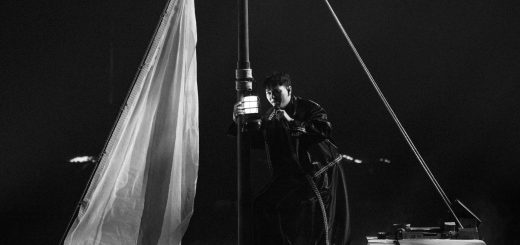
Israel’s ESC 2026 Song Is Picked, Sealed… and Still Under Wraps

Israel has done the very modern Eurovision thing of announcing everything except the one detail we all actually want, but to be fair, that’s half the sport now: KAN has confirmed that Israel’s Eurovision 2026 entry for Vienna has been chosen for Noam Bettan, written by Yuval Raphael, Tslil Klifi and Nadav Aharoni, and it’s heading to the EBU for final approval before the public even gets a sniff of the hook.
Not a ballad, not a monolingual moment, and definitely not business as usual
The first eyebrow-raiser is the creative brief, because after two years of Israel leaning into the ballad lane, KAN is signalling a shift: this is described as a different style, explicitly not a ballad, and it will be performed in Hebrew, French and English, which is either a smart way to widen the emotional reach or a very elegant way to keep Eurovision Twitter arguing for weeks about which language “hits harder”.
And yes, the French angle isn’t coming out of nowhere, because Bettan has strong French ties and often works in that space anyway, so the multilingual plan reads less like a gimmick and more like a choice that actually fits the artist, which is always refreshing in a contest that sometimes treats singers like mannequins for a national mood board.
Two hundred songs walked in. One song walked out. Nobody knew who wrote what.
The selection process itself is also being sold as properly committee-led and deliberately blind: roughly 200 songs were submitted anonymously, around 40 moved forward for deeper consideration, and four made it to the final round, with Bettan recording all four so the committee could judge the full performance rather than a demo and a prayer.
The final decision, according to the Israeli reporting being echoed internationally, was made via a secret vote with legal oversight, which sounds like something you’d attach to a small election rather than a three-minute pop song, but Eurovision nations have learned the hard way that transparency is not optional when the internet is awake.
The Yuval Raphael factor: a neat creative loop, handled carefully
Then there’s the detail that makes this feel distinctly “Eurovision narrative department”: Yuval Raphael, last year’s Israeli representative, is one of the writers on the chosen song. It’s not unprecedented for former representatives to write for the next one, and honestly, it can be a very tidy way to pass the baton without turning it into a nostalgia act, but it does raise the obvious question of conflicts and perception.
KAN’s side of the story leans on procedure and safeguards, framing the process as professional and bias-resistant; the practical takeaway for fans is simpler: Israel is going into Vienna with a song shaped by creators who know the contest from the inside, and that usually means the entry will arrive with intent rather than vibes.
So when do we actually hear it?
The reveal is set for Thursday 5 March on KAN 11, in a prime-time slot following the evening news, which is very “national event energy” and also very “we want everyone watching at once so nobody leaks it early and ruins the moment”.
The editorial bit (if you are interested in)
What I like about this announcement is that it isn’t trying to sell you a myth, it’s selling you a method: multilingual, non-ballad, and chosen through a process designed to look defensible under a microscope. Whether the song itself is a genius stroke or a very expensive conversation starter, we’ll find out on 5 March, but the broader message is clear enough: Israel doesn’t want to show up in Vienna with something that merely “sounds nice”. It wants something that reads as deliberate, in structure, in language, and in who’s behind it, and in Eurovision terms that’s usually the difference between “pleasant” and “actually competitive”.
Source: Euromix